Updated August 3, 2026
VA loan benefits can help eligible Veterans, service members, and qualifying surviving spouses buy a home with no down payment, avoid monthly mortgage insurance, limit certain closing costs, and use several protections that are not available with every mortgage program.
A VA-backed loan is not an automatic approval or a loan directly from the Department of Veterans Affairs. A private lender makes the loan, while the VA guarantees a portion of it. You still need a valid Certificate of Eligibility (COE) and must meet VA and lender requirements for credit, income, occupancy, and the property. The right comparison depends on your complete financial picture.
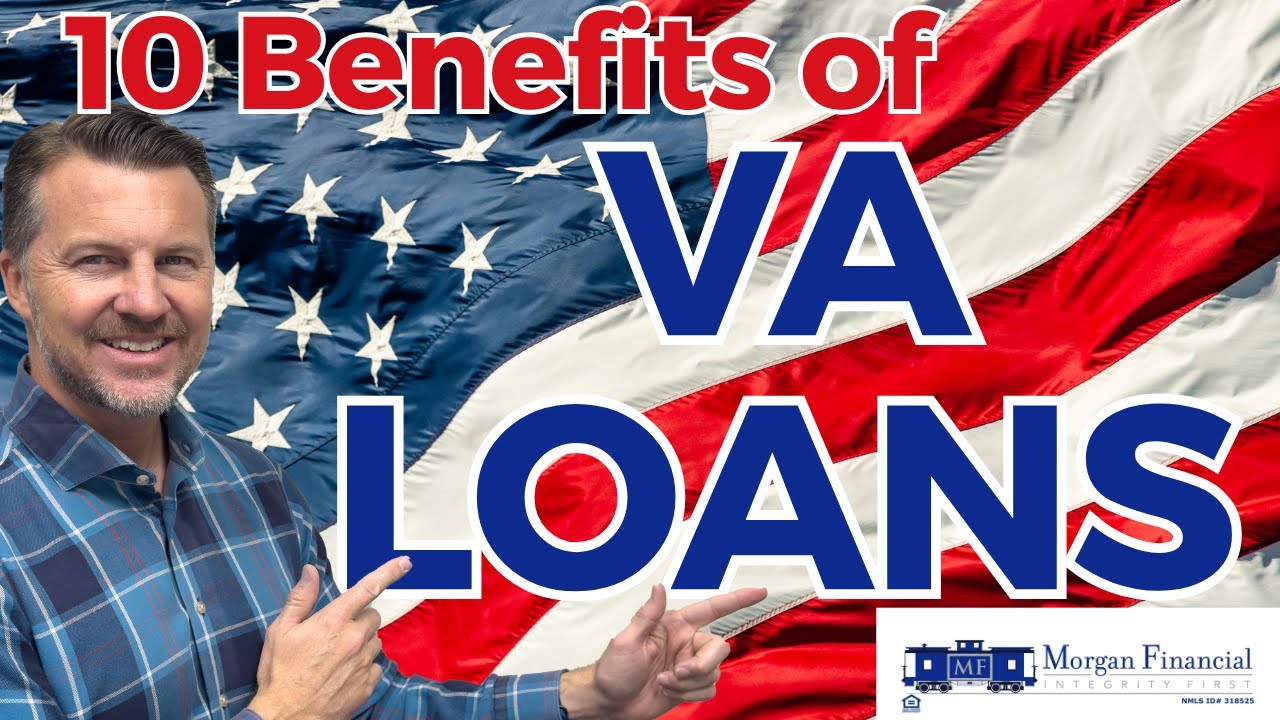
Want a quick overview first? This video explains the core benefits:
VA loan benefits at a glance
| Benefit | Why it can matter | Important qualification |
|---|---|---|
| No down payment in many cases | Preserves cash for moving, repairs, reserves, or other priorities | The price generally cannot exceed the appraised value, and lender approval still applies |
| No monthly mortgage insurance | Avoids the recurring PMI or MIP charged by some other low-down-payment loans | A one-time VA funding fee may apply |
| Competitive loan terms | The VA guaranty reduces part of the lender’s risk | Rates and fees vary, so compare official Loan Estimates |
| No VA-set minimum credit score | Allows the full file to be considered under VA guidelines | Lenders may set their own minimums and underwriting standards |
| Closing-cost protections | VA rules limit certain borrower-paid fees | Buyers still have closing costs, and seller help must be negotiated |
| Reusable entitlement | The benefit is not limited to one home purchase | Entitlement, prior VA loans, occupancy, and qualification affect the next use |
| No prepayment penalty | You may pay extra principal or pay off the loan early without a VA-loan penalty | Confirm how your servicer applies additional payments |
| Several eligible property types | Can support more than a standard single-family purchase | The home must meet program, lender, appraisal, and occupancy requirements |
| Assumable financing | A qualified buyer may be able to take over an existing VA-backed loan | Approval, liability release, and entitlement restoration require careful review |
| Help during financial hardship | VA may work with the servicer to help an eligible borrower avoid foreclosure | Borrowers should contact their servicer and VA as soon as trouble begins |
How the 10 VA loan advantages work
1. No down payment may be required
Eligible borrowers can often finance 100% of a home’s value. The VA says a purchase loan may require no down payment when the sales price is not higher than the appraised value. That can allow a buyer to keep more cash available for reserves, moving costs, furnishings, or repairs.
No down payment does not mean no money due at closing. Closing costs, prepaid taxes and insurance, and any price above the appraised value still need to be addressed. Borrowers with partial entitlement may also need a down payment in some situations. Review the VA’s purchase-loan guidance for the current program framework.
2. There is no monthly private mortgage insurance
VA-backed loans do not require monthly private mortgage insurance (PMI) or FHA-style mortgage insurance premiums (MIP). See what VA borrowers pay instead, and how the funding fee compares. This is different from many conventional loans with less than 20% down and from FHA financing.
That does not make every VA loan less expensive. Most non-exempt borrowers pay a one-time VA funding fee, and the interest rate and other lender charges still matter. Compare the full payment, cash to close, and long-term cost rather than focusing on one line item.
3. VA-backed loans can offer competitive terms
Because the VA guarantees a portion of the loan, participating lenders may offer competitive interest rates and terms. Your actual offer will depend on market conditions, credit, income, loan structure, discount points, and the lender.
The most reliable comparison is between official Loan Estimates prepared for the same loan amount, down payment, property, lock period, and scenario. A Veteran with strong credit and a meaningful down payment should compare VA and conventional options side by side rather than assuming one program always wins. Our VA-versus-conventional guide explains the tradeoffs.
4. VA does not set a universal minimum credit score
The VA does not require one minimum credit score for every VA-backed loan. Instead, lenders review credit history, income, debts, assets, residual income, and the overall ability to repay. Individual lenders may still establish their own credit-score minimums and additional requirements.
This flexibility can help when a single score does not tell the borrower’s full story, but it is not relaxed underwriting or guaranteed approval. The lender must still determine that the borrower and property meet all applicable requirements.
5. VA rules limit certain closing costs
VA rules limit fees that can be charged to the Veteran borrower and allow buyers and sellers to negotiate payment of many closing costs. The VA currently allows seller concessions of up to 4% of the home’s reasonable value, while ordinary closing-cost credits are treated separately under VA rules.
Closing costs vary with the property, location, loan amount, lender, title work, taxes, insurance, and funding-fee status. The VA’s funding-fee and closing-cost page explains what may be paid and financed. On a purchase loan, the VA funding fee may generally be financed, but other closing costs cannot simply be added to the VA loan amount.
6. You may be able to use the benefit more than once
A VA home loan benefit is not limited to a first home or a single use. Entitlement can often be restored after a prior VA-backed loan is paid off and the property is sold. A borrower may also have remaining entitlement that can support another VA purchase.
Having enough entitlement is only one part of the decision. You must still qualify financially and meet the occupancy requirement for the new home. If you already have a VA loan, ask the lender to review your current COE and remaining entitlement before shopping at a specific price point.
7. There is no prepayment penalty
VA-backed loans do not allow a lender to charge a penalty simply because you pay the mortgage off early. You can sell, refinance, make additional principal payments, or pay the balance ahead of schedule without a VA prepayment penalty.
If you send extra money, give the servicer clear instructions to apply it to principal and confirm the transaction on the next statement.
8. VA financing works with several property types
Depending on the lender and property, VA financing may be used for an existing single-family home, a townhouse, a unit in a VA-approved condominium project, a manufactured home and lot, new construction, or a property with up to four residential units.
The home generally must be your primary residence and must meet VA minimum property requirements. Condominiums require project approval, and lender availability can be more limited for manufactured homes, construction loans, or multi-unit properties. Read our VA occupancy guide before planning a second home, investment purchase, or move-in timeline.
9. VA loans are assumable with approval
A qualified buyer may be able to assume an existing VA-backed mortgage instead of obtaining a new loan. An assumption can be attractive when the existing rate and remaining term compare favorably with current financing.
Assumability is not an automatic transfer. The servicer or VA must approve the buyer, and the seller should obtain a formal release of liability. Entitlement may remain tied to the loan unless an eligible substitute uses their own entitlement, so sellers should review those consequences before agreeing to an assumption.
10. VA offers support when borrowers face hardship
The VA home loan program includes servicing support for borrowers who encounter temporary financial difficulty. The VA may work with the loan servicer to explore options intended to help avoid foreclosure.
Help is most useful when requested early. A borrower who expects to miss a payment should contact the servicer promptly and use the official contact information on VA.gov rather than responding to unsolicited refinance or foreclosure-rescue offers.
The main VA loan cost to understand
The VA funding fee is a one-time charge that helps support the program. The amount depends on the loan type, down payment, and whether the benefit has been used before. Some Veterans, service members, and surviving spouses are exempt based on qualifying circumstances. The current fee and exemption rules should be confirmed on the official VA website for the specific transaction.
For a purchase, the funding fee may usually be paid at closing or financed into the loan. Financing reduces the immediate cash requirement but increases the balance and the interest paid over time. A larger down payment can reduce the fee in some purchase scenarios. Compare both the upfront and long-term costs.
A VA loan is also not automatically the best choice for every eligible borrower. Conventional financing may compare well for someone with strong credit, a large down payment, and an applicable funding fee. The best answer comes from reviewing the same purchase scenario under each realistic program.
How Morgan Financial makes the VA loan process smoother
Many mortgage companies have a processor perform an initial review, collect documents, and send the file to an underwriter later in the transaction. When the underwriter then requests additional items close to closing, the borrower can feel rushed.
Morgan Financial underwrites the file upfront. The underwriter identifies the items needed, and the processor then works with the borrower to collect those specific documents. That sequence is designed to reduce late surprises and create a faster, more enjoyable, and more consistent mortgage experience. Every closing timeline still depends on the borrower, property, appraisal, title, loan program, and underwriting conditions.
If an appraisal issue arises, review the practical options in our guide to a low VA appraisal.
Frequently asked questions about VA loan benefits
Does every VA borrower qualify for zero down?
No. Zero-down financing depends on eligibility, available entitlement, lender approval, the purchase price, and the appraised value. A down payment may be necessary when entitlement is limited or the price exceeds the appraised value.
What credit score is required for a VA loan?
The VA does not set one universal minimum credit score, but individual lenders may. Approval also depends on income, debts, credit history, residual income, assets, and the property.
Can I use a VA loan more than once?
Yes, many borrowers use the benefit multiple times. Whether you have full, restored, or remaining entitlement affects how the next purchase can be structured.
Can I buy an investment property with a VA loan?
A VA purchase loan is generally for a primary residence, not a property purchased solely as an investment. A two- to four-unit property may be eligible when you intend to occupy one unit and all other requirements are satisfied.
Is the VA funding fee always required?
No. Certain borrowers are exempt, including some Veterans receiving or eligible to receive VA compensation for a service-connected disability and certain surviving spouses. The lender should verify the funding-fee status before closing.
Is a VA loan always better than a conventional loan?
No. VA financing offers valuable benefits, but the right program depends on the borrower’s funding-fee status, credit, down payment, property, cash-flow goals, and available loan terms. Compare official Loan Estimates for the same scenario.
Compare your VA loan options
Eligibility is only the starting point. Morgan Financial can review your COE, entitlement, income, credit, property plans, and expected cash to close, then compare realistic VA and conventional structures. Visit our VA Home Loan Resource or contact Morgan Financial for a no-pressure conversation about your next step.
This article is for educational purposes only and is not financial, legal, tax, or insurance advice or a commitment to lend. Loan approval, terms, and program eligibility depend on borrower, property, lender, and program requirements. Verify current requirements with a licensed mortgage professional and the relevant government agency.