
Mortgage cash reserves are eligible funds or assets you still have available after paying your down payment and closing costs. They help show that you can manage the mortgage after the keys are yours, but the amount a lender requires depends on your loan and financial situation.
Buying a home in Brevard County means planning beyond the closing table. Your property’s insurance, tax estimate, association obligations and immediate repair needs all deserve a place in the budget. This guide explains mortgage cash reserves and how to plan the money you will have left as a Space Coast homeowner.
Updated September 21, 2026. By Joe Harris, COO, NMLS #322991.
Watch Joe’s original explanation below, then use the written guide for a more detailed look at reserve planning and loan-specific requirements.
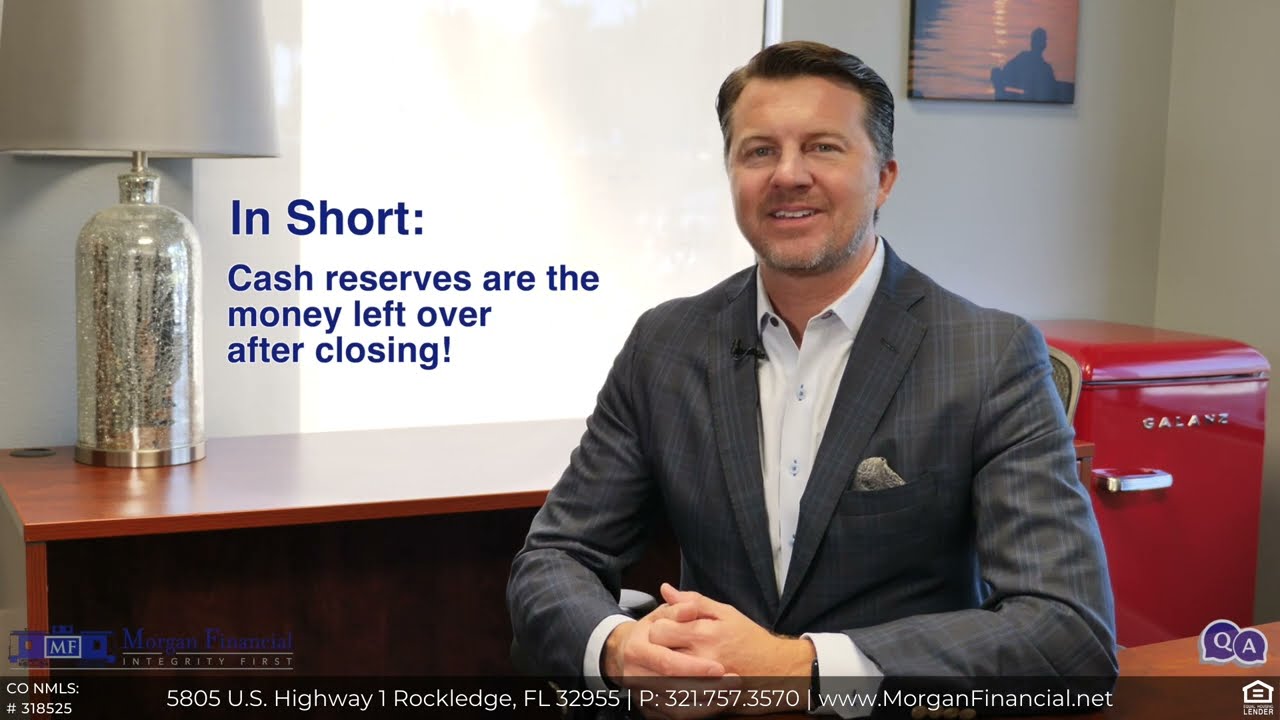
How are cash reserves different from closing costs?
Reserves are what remains available after closing—not another fee you pay to the lender. Your down payment, transaction expenses and post-closing cushion serve different purposes. Keeping them separate makes a homebuying budget easier to understand.
| Money category | What it does | Planning question |
|---|---|---|
| Down payment | Pays part of the purchase price. | How much will I contribute? |
| Closing costs and prepaids | Cover transaction charges and certain expenses collected at closing. | What does my current estimate include? |
| Mortgage reserves | Remain available after closing under the loan’s asset rules. | How much must remain, and which assets qualify? |
| Personal emergency savings | Support your household when unexpected expenses occur. | What cushion feels workable for my circumstances? |
An escrow account is different, too. It holds money collected to pay expenses such as property taxes and insurance through your mortgage servicer. It is not the same as savings available for an emergency. The CFPB’s escrow explanation describes how those payments work.
Our Brevard County closing-cost guide covers the separate cash-to-close side. Ask your loan officer or their assistant to review your disclosures, including the Loan Estimate, and explain what you will pay versus what must remain available.
How do lenders calculate mortgage reserves?
Reserve requirements are commonly expressed in months of the qualifying housing payment. PITI means principal, interest, taxes and insurance; some calculations also include association dues and other applicable housing expenses. Ask which payment components apply to your file.
Illustrative Melbourne homebuyer example—not a Loan Estimate or a local market average: Suppose a buyer’s applicable qualifying payment is $2,500 per month. If the loan requires two months of reserves, the target would be $5,000; if it requires six months, the target would be $15,000. These hypothetical figures explain the math, not a requirement that applies to every Melbourne buyer.
If that buyer has $30,000 in eligible funds and uses $24,000 to close, $6,000 remains before other spending. That could cover the example’s two-month requirement, but not its six-month requirement. Setting aside another $2,000 for moving and an immediate repair would leave only $4,000 for other needs. This is why passing a reserve review and feeling comfortable with your household budget are separate questions. Your loan team must verify the actual qualifying funds and timing of any spending.
Do not count the same dollars twice. Money already committed to closing cannot also remain available afterward. Moving expenses, furniture and planned repairs can reduce the cushion you actually have, even when those purchases are outside the mortgage transaction.
Which assets can count as reserves?
Checking and savings balances are the easiest examples to understand, but eligible investments or vested retirement assets may also count, subject to the program’s access and documentation rules. An account’s total balance and its qualifying value are not always identical.
Fannie Mae’s reserve guidance identifies eligible asset categories and exclusions. It also distinguishes eligible cash gifts from gifts of equity. Those rules should not be assumed to apply to every mortgage program.
You do not automatically need to withdraw retirement money just because the account is being reviewed. Ask the loan team what documentation is needed before selling investments, taking a distribution or moving money. A qualified tax or financial adviser can explain consequences outside the mortgage review.
For bank accounts, keep statements and records of transfers or unusual deposits available. Fannie Mae’s depository-account guidance addresses source documentation and business funds. A business balance is not automatically available for a home purchase without considering the business’s needs.
Does every mortgage require the same cash cushion?
No. The property, occupancy, loan program and underwriting findings can change the reserve requirement. A single-family primary residence should not be compared automatically with a rental property or a multi-unit purchase.
For example, Fannie Mae’s guidance sets different minimums for certain second-home and multi-unit transactions. Automated underwriting can also require additional reserves based on the file. Its asset-verification guidance explains the role of those findings. Ask for your actual requirement rather than relying on a number from another buyer’s experience.
VA multi-unit purchases deserve special attention. When prospective rent from the property is used to qualify, the VA Lender’s Handbook, Chapter 4, calls for at least six months of PITI reserves and a reasonable likelihood of success as a landlord. Those reserves must be the borrower’s own funds, not a gift; equity in the property does not replace them. This is not a blanket six-month rule for every VA buyer.
Our VA duplex, triplex and fourplex guide explains the broader purchase scenario. Confirm requirements before relying on rent to support your qualification.
What should Brevard County buyers keep in mind after closing?
A lender’s minimum is an approval requirement, not a personalized emergency-fund recommendation. Your comfortable cushion should reflect your household obligations and the particular home.
Before committing all available savings, consider the following questions:
- Have you included the actual property’s insurance quote and applicable deductible?
- What repairs or replacements did the home inspection identify?
- Are moving costs, utility setup and immediate purchases already budgeted?
- For a condo, have you reviewed dues and disclosed assessments?
- If income varies during the year, how will you handle a quieter month?
Review the hurricane deductible in dollars. The Florida Department of Financial Services explains that percentage-based hurricane deductibles are tied to the policy’s dwelling or structure coverage limit. Ask your insurance professional to translate your particular deductible into a dollar amount. This is a household risk-planning question, not an extra mortgage reserve requirement.
Build a buyer-specific property-tax estimate. The Brevard County Property Appraiser cautions purchasers not to assume property taxes will stay the same. Review the property record and discuss applicable exemptions with the appraiser’s office; have your loan team explain the tax figure used in your payment estimate.
Match the plan to the home. For a Cocoa Beach condo, ask the association about current dues and disclosed assessments before deciding what savings to retain. For a Palm Bay single-family home, use the inspection findings to plan any immediate roof, air-conditioning or other repairs. These are illustrative planning situations, not claims that a particular community or property has a problem.
The goal is a workable homeownership plan, not the largest possible down payment. Ask Morgan Financial to explain how different down-payment choices affect both your loan and what remains in your accounts.
How can you prepare for the reserve review?
Start with a clear picture of your funds and planned spending, then let your loan team identify the documentation needed for your specific situation.
- List your accounts. Separate personal savings, investments, retirement assets and business funds.
- Identify committed money. Note your deposit, estimated cash to close and planned purchases.
- Ask for the actual reserve requirement. Confirm the payment used, number of months and eligible assets.
- Provide the requested records. Keep complete statements and a clear trail for relevant transfers.
- Check before making financial changes. Discuss withdrawals, new debt or large purchases while your loan is underway.
Our mortgage underwriting guide explains the larger review. Upfront underwriting supports Morgan Financial’s Fast, Enjoyable, Consistent approach, but later changes to the borrower, property or loan can still require additional information.
Frequently asked questions about cash reserves
Do I give reserve money to the lender?
Generally, qualifying reserves remain your eligible assets after closing rather than becoming a separate lender fee. Follow the documentation requirements for your particular loan and keep cash-to-close funds separate in your planning.
What are PITI reserves?
They are reserves measured against months of principal, interest, taxes and insurance. Some loan calculations include additional housing costs, so ask your loan officer which total applies.
Can a gift count toward mortgage reserves?
It depends on the program and transaction. A gift that can help with closing is not automatically eligible for reserves. In particular, the VA multi-unit rental-income reserve rule discussed above requires the borrower’s own funds.
Can I use a retirement account without cashing it out?
Possibly. Eligibility depends on vesting, access, documentation and the loan’s rules. Have the account reviewed before making a withdrawal; do not assume liquidation is required.
How much should I have left after buying a home in Brevard County?
First establish your loan’s reserve requirement. Then review the particular home’s insurance deductible, buyer-specific tax estimate, association obligations and expected repairs. Your location helps identify useful budgeting questions; it does not establish one savings amount that fits every buyer.
Buying on the Space Coast? Build your cash plan before you make an offer. Talk with Morgan Financial’s Melbourne team about your cash to close, eligible reserves and what you want to retain for life after closing. Our Brevard County mortgage team can help you understand the next steps for your specific homebuying plans.
This article is for educational purposes only and is not financial, legal, tax, or insurance advice or a commitment to lend. Loan approval, terms, and program eligibility depend on borrower, property, lender, and program requirements. Verify current requirements with a licensed mortgage professional and the relevant government agency. Morgan Financial, NMLS #318525.